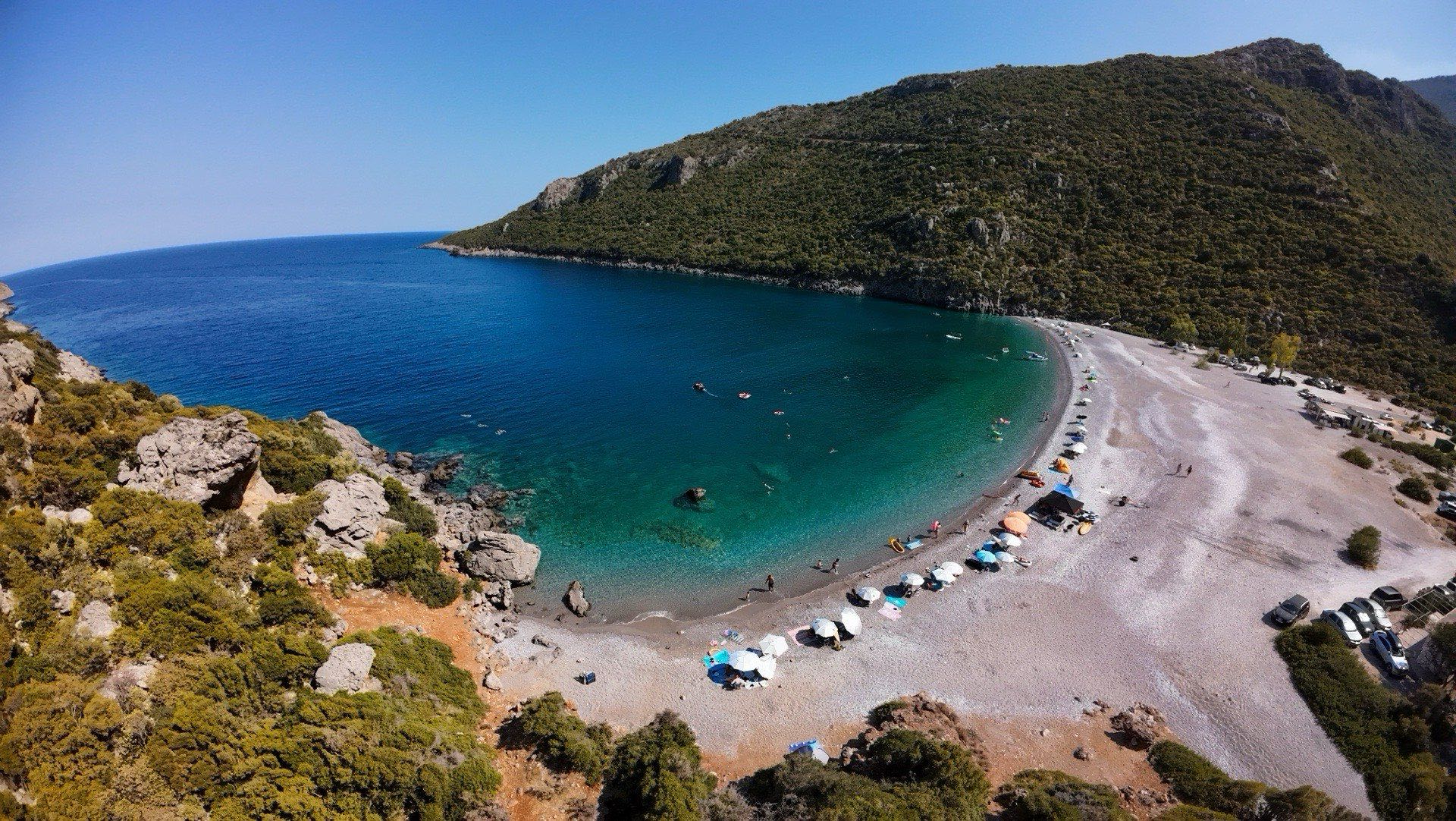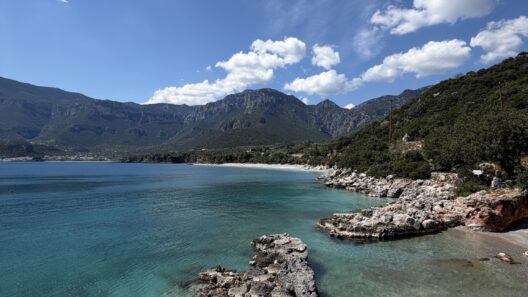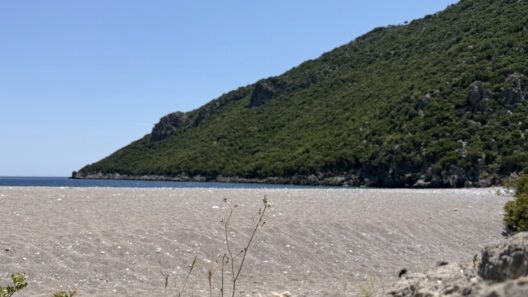


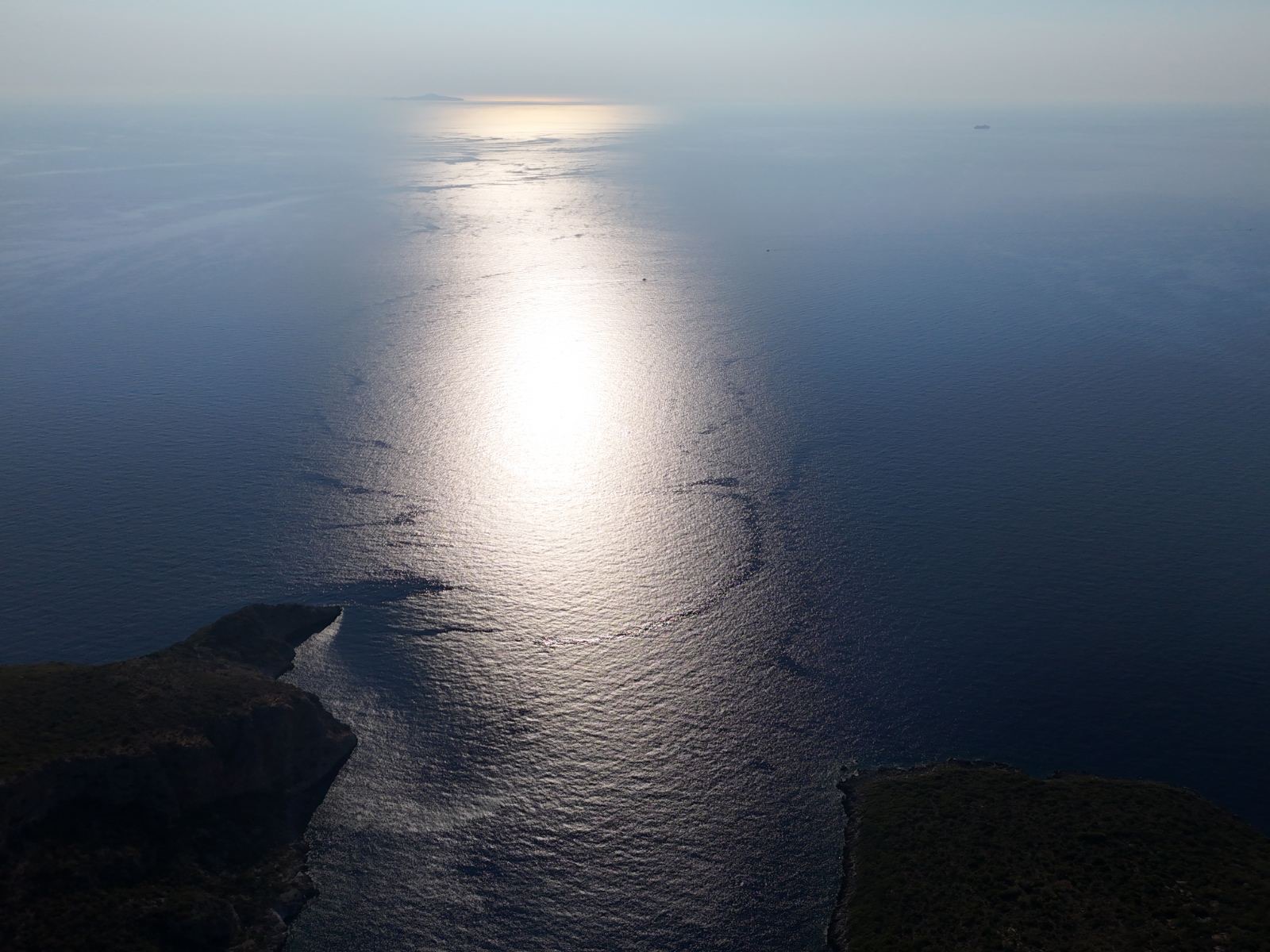
Technology meets the beauty of nature, and the result is a stunning photograph captured by drone, traveling over the waters of Laconia. This drone covered a distance of more than 6 kilometers, starting from Lampokambos in Zarakas, to reach the shores of Vlychada and capture this wonderful moment.
In the photograph, the morning light reflects magically on the calm sea, creating a golden path that fades into the horizon. The eye travels effortlessly from the rugged headlands visible at the edges of the image to the endless blue that seems to have no end. The simplicity and tranquility of the landscape are captivating, highlighting both the ruggedness and the calm of the Greek sea.
This unique image is a testament to the area’s natural beauty and the power of technology to bring such rare moments closer to us. The drone’s journey from Lampokambos to Vlychada brings us closer to a world that often remains unexplored, allowing us to enjoy landscapes that feel otherworldly, yet at the same time so familiar.
This photograph is not just an image of the sea; it is a reminder of the beauty that surrounds us, and how important it is to preserve it for future generations.
Seeing the Coast from a New Perspective
Aerial photography changes the way familiar places are understood. From above, headlands become part of a larger coastal pattern, underwater color reveals changes in depth, and the relationship between mountain roads and isolated beaches becomes clear. The image is valuable not only for its beauty, but also as a visual record of the landscape at a particular moment.
Photography with Responsibility
Drone operators must protect privacy, avoid disturbing wildlife, respect restricted areas, and follow the aviation rules that apply at the time of flight. Wind can change quickly along an exposed coastline, while long distances over water leave little margin for error. Careful planning is therefore as important as the camera itself.
Used responsibly, aerial photography can deepen appreciation for places such as Vlychada. It shows why these natural areas deserve thoughtful visitation and long-term protection.