


Few places in Greece can tell such a continuous story as ancient Zarax. From the mythical hero who founded it in the 13th century BC to today’s picturesque little harbor where sailboats moor, this place never truly ceased to live. It did, however, change its name, its rulers, and its role — and that transformation is a fascinating story in its own right.
The Roman Revival and the League of Free Laconians
After the destruction of the Hellenistic era, Zarax found an unexpected new life. During Roman times, it joined the League of Free Laconians (Koinon of the Eleutherolakones), the confederation of Laconian towns that the emperor Augustus declared autonomous and independent of Sparta, granting them significant privileges.
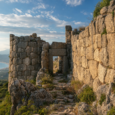
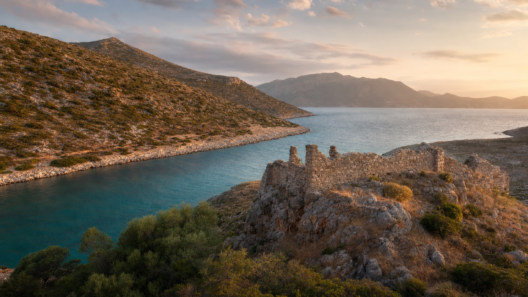
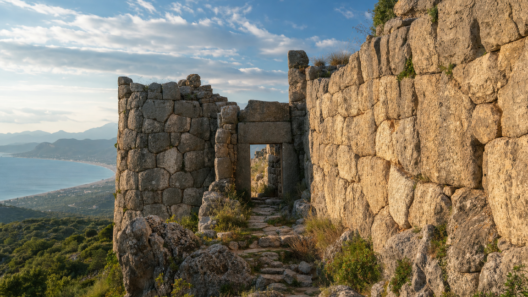
It was a period of relative prosperity. During this time the temple of Apollo was rebuilt, the acropolis was reconstructed, and later a three-aisled Christian basilica was raised within it. Although Pausanias in the 2nd century AD described the city as ruinous, life went on. The end of this phase came violently: the city appears to have been abandoned after the great earthquakes of 365 AD that struck the entire Peloponnese.
Ierax: The Byzantine Watchtower Castle
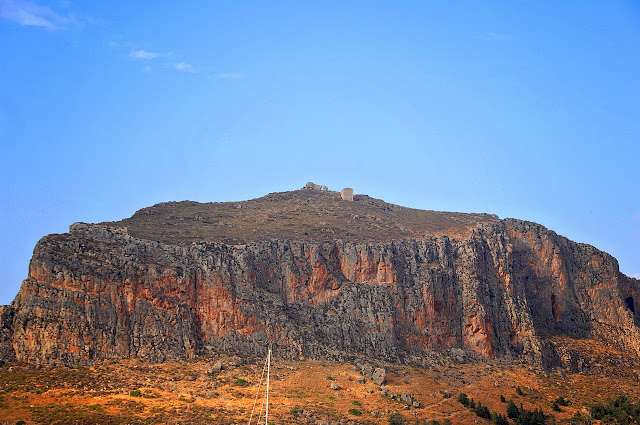
The name “Zarax” did not disappear — it transformed. As early as late antiquity, the name “Ierax” (meaning “hawk”) begins to appear, eventually prevailing in the Byzantine era and reaching down to today’s Gerakas. Two explanations are offered: either because the site, high above the bay, resembles a bird of prey surveying the whole area, or simply as a corruption of the ancient word “Zarax.”
In Byzantine times, Ierax gained great strategic importance. It served as a Byzantine naval station in the fight against Saracen pirates, who had their bases in Crete and along the coasts of Africa. The safe fjord, which once nourished ancient trade, now became a refuge and base for the Byzantine fleet. The site belonged to the domain of the Metropolis of Monemvasia, as attested by a golden bull (chrysobull) of the emperor Andronikos II Palaiologos dated to the year 1301.
Porto Cadena: The Harbor With the Chain
In 1462 the area passed under Ottoman rule, followed over the next roughly four centuries by an alternation of Turkish and Venetian control. The Venetians, recognizing the great value of the harbor, walled it and closed its entrance with chains — which is why it became known as “Porto Cadena” (Harbor of the Chain).
Travelers gave it other names too: “Porto Bottas” or “Porto des Tonneaux,” a name perhaps derived from the shape of the bay, which resembles a military boot. The harbor was also a hideout for the notorious pirate Roger de Lauria of Aragon, when he was planning his raid on Monemvasia, as well as an anchorage for merchants from Hydra and Spetses.
In the difficult years of the Greek War of Independence, with the invasion of Ibrahim Pasha, many residents fled to the mountains to survive.
Gerakas Today: Three Settlements, One Fjord
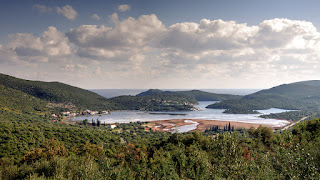
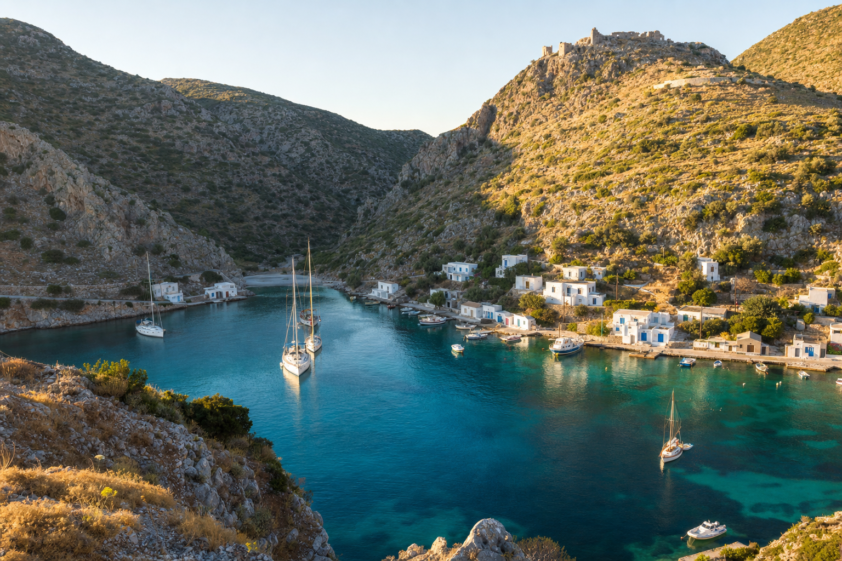
Today, Gerakas consists of three settlements: Limeni (the picturesque little harbor), Gerakas, and Agios Ioannis. It lies just 22 kilometers from Monemvasia and is built inside a narrow fjord that winds nearly a mile inland — the southernmost fjord in Europe.
The harbor remains, as it was in antiquity, a sheltered anchorage hidden behind the rocks — exactly as the writer Andreas Karkavitsas described it in his “Words from the Prow.” Sailboats and vessels find safe haven here, while visitors can enjoy the fish tavernas and taste the legendary touloumotyri cheese of the wider Zarax region.
A Living Monument
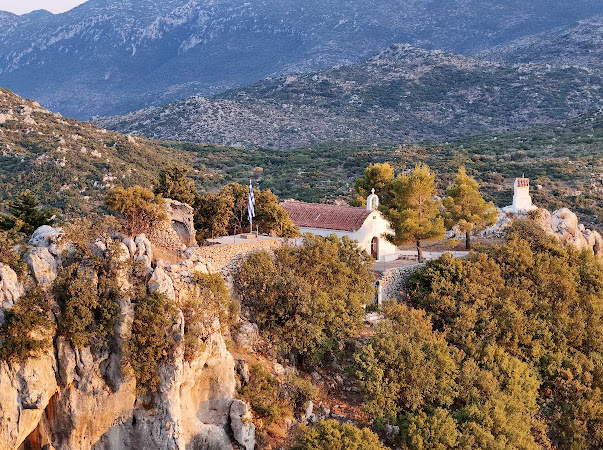
From the lagoon, an easy half-hour path leads today’s visitor up onto the hill, where the walls of ancient Zarax still stand. It is a route that, in reality, crosses 3,500 years of history: from the mythical Zarex and Pausanias, to the Romans and Byzantines, from the Venetians and Ottomans down to the fishermen and travelers of today.
Zarax is not merely ruins. It is a story that continues — and its name, transformed into “Gerakas,” still echoes each time a boat enters the sheltered fjord.
Sources: Monemvasia.gr — History · lakonia.mobi — Gerakas · Notospress — Gerakas Laconia · Kastrologos — Ancient Zarax · Eternal Greece — Zarax / Limin Ieraka